India is a country known for its rich cultural heritage, a tapestry of traditions, and a diversity that spans centuries. One of the most vivid expressions of this cultural wealth is its handicrafts—intricate, handcrafted works that carry the essence of India’s history, mythology, and local traditions. These handicrafts, which vary from region to region, reflect the creative genius and the unique artistic practices of the artisans who create them. In this blog, we will explore the fascinating world of Indian handicrafts, their significance, and the craftsmanship behind them.
The Diversity of Indian Handicrafts
India’s handicrafts are as diverse as its people, with every region offering its own special creations that reflect the local customs, climate, and available materials. Broadly speaking, Indian handicrafts can be categorized into several categories: textiles, pottery, metalwork, woodwork, jewelry, and more. Here’s a closer look at some of the most renowned Indian handicrafts:
1. Textile Crafts
India is home to some of the world’s finest textiles, many of which have been made by hand for centuries. These include:
Kanjivaram Silk Sarees:
Originating from Tamil Nadu, these are perhaps the most iconic of Indian sarees. Made from pure silk, Kanjivaram sarees are known for their intricate weaving, luxurious feel, and rich colors. The sarees are often woven with gold or silver zari (thread) and feature motifs inspired by mythology and nature.
Pashmina Shawls:
Originating from the Kashmir Valley, Pashmina shawls are woven from the fine wool of the Pashmina goat. They are incredibly soft, lightweight, and prized for their warmth and luxurious texture.
Bandhani:
This tie-and-dye technique is prevalent in Gujarat and Rajasthan. Bandhani textiles, often in vibrant colors, showcase beautiful patterns created by tying small sections of fabric before dyeing it.
Chanderi and Maheshwari Sarees:
These are traditional handwoven sarees from Madhya Pradesh. Chanderi sarees are known for their sheer texture and lightness, while Maheshwari sarees are famous for their unique blend of cotton and silk.
2. Pottery and Ceramics
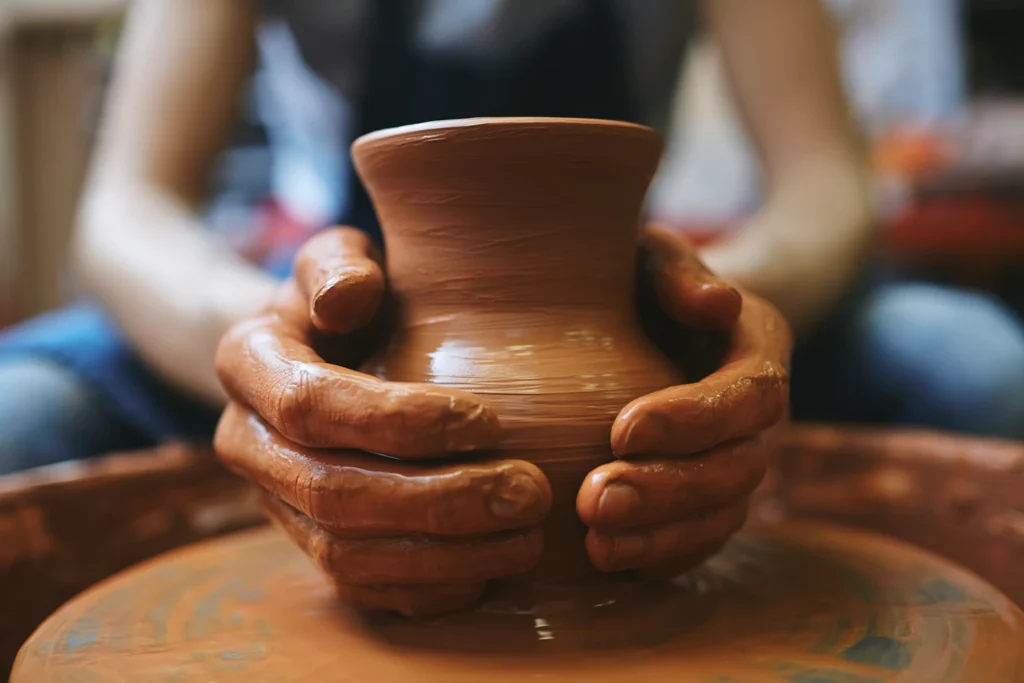
The art of pottery in India dates back to ancient times, and it is still an important part of the country’s craft heritage. Some of the most notable pottery traditions include:
Blue Pottery (Jaipur):
Originating in Rajasthan, Jaipur’s blue pottery is a form of glazed pottery that is made with a special blue dye. The motifs often include floral patterns, birds, and geometric designs.
Terracotta Crafts:
Found throughout India, terracotta pottery is made from natural clay. From simple earthenware to intricate figurines, this craft plays an important role in both domestic and ritualistic use. The craft is especially prominent in West Bengal, Odisha, and Uttar Pradesh.
Dhokra Art:
A traditional form of metal casting, Dhokra art involves using the lost-wax technique to create intricate sculptures, jewelry, and figurines. It is primarily practiced in West Bengal, Odisha, and Madhya Pradesh.
3. Woodwork and Carpentry
Woodworking has a long tradition in India, and many regions are known for their unique wooden handicrafts:
Sculptured Woodwork (Karnataka and Kerala):
The intricate wood carvings from these states are often seen in temple architecture and household items. These carvings depict deities, animals, and floral patterns.
Kathyawadi Woodwork (Gujarat):
Known for its colorful designs, this type of woodworking is used in making furniture and artifacts. The art is characterized by bold geometric patterns and the use of bright colors.
Madhubani Paintings on Wood (Bihar):
Though Madhubani paintings are often done on paper, they can also be painted on wooden items like trays, boxes, and panels. The vibrant designs and motifs from this art form add life to the objects.
4. Jewelry Making
India has been famous for its rich tradition of jewelry making, and artisans have perfected the art of designing pieces that are as intricate as they are beautiful. Some of the famous forms include:
Kundan and Meenakari Jewelry:
Both of these types of jewelry originated in Rajasthan. Kundan involves setting stones (mostly diamonds and emeralds) in gold, while Meenakari involves intricate enamel work on gold.
Filigree Jewelry (Odisha):
This delicate form of jewelry making involves creating intricate designs with fine threads of silver or gold. The artistry behind filigree pieces, often crafted into earrings, necklaces, and bangles, is truly exceptional.
Temple Jewelry (South India):
Traditionally worn by temple dancers and idols, this jewelry style includes large, ornate necklaces, bangles, and earrings often made with gold and precious stones.
5. Metal Crafts
The art of metalworking in India has evolved over millennia, with several states being famous for their exceptional craftsmanship in brass, copper, and silver. Some of the most notable metal crafts include:
Bidriware (Karnataka):
Bidriware is a unique form of metalwork that uses a special alloy of zinc and copper. The metal items are engraved with intricate designs and then inlaid with silver. It is most commonly seen in items like vases, trays, and boxes.
Brass and Copperware (Rajasthan):
Rajasthan is well known for its brass and copperwork, often seen in traditional pots, urns, and decorative items. These pieces feature intricate patterns and are sometimes embellished with enamel work.
The Significance of Indian Handicrafts
Handicrafts hold a special place in the heart of Indian society. Not only do they preserve ancient traditions, but they also provide livelihoods to millions of artisans who rely on their craft to sustain their families. The production of these handicrafts is often a labor of love, with each item carrying the unique touch and personality of its maker.
Moreover, Indian handicrafts have a deep connection to the country’s spiritual and cultural life. Many objects are made for religious rituals, ceremonies, and festivals. For instance, brass idols of deities, intricately woven prayer mats, and specially crafted ritual vessels are all examples of how handicrafts play an important role in India’s spiritual practices.
Preserving the Legacy
As modernization progresses and industrialization spreads, the world of traditional handicrafts faces numerous challenges. The demand for mass-produced, machine-made goods has led to the decline of many artisan traditions. However, with the rise of conscious consumerism and a renewed appreciation for sustainable, handmade goods, there has been a resurgence of interest in Indian handicrafts.
Several organizations, both government and non-governmental, are working to promote and preserve these crafts. Craft fairs, exhibitions, and online platforms are helping artisans reach a global market. These efforts have been crucial in reviving many endangered crafts and ensuring they are passed on to future generations.
Conclusion
Indian handicrafts are a celebration of artistry, culture, and tradition. From the vibrant colors of Bandhani to the intricate metalwork of Bidriware, these handcrafted pieces are not merely objects—they are stories, history, and culture encapsulated in material form. By embracing and supporting these traditional arts, we not only honor the craftsmanship of Indian artisans but also ensure that these centuries-old skills continue to thrive in the modern world. So, the next time you buy a handcrafted item, remember that you’re not just purchasing a product; you’re holding a piece of India’s rich legacy in your hands.